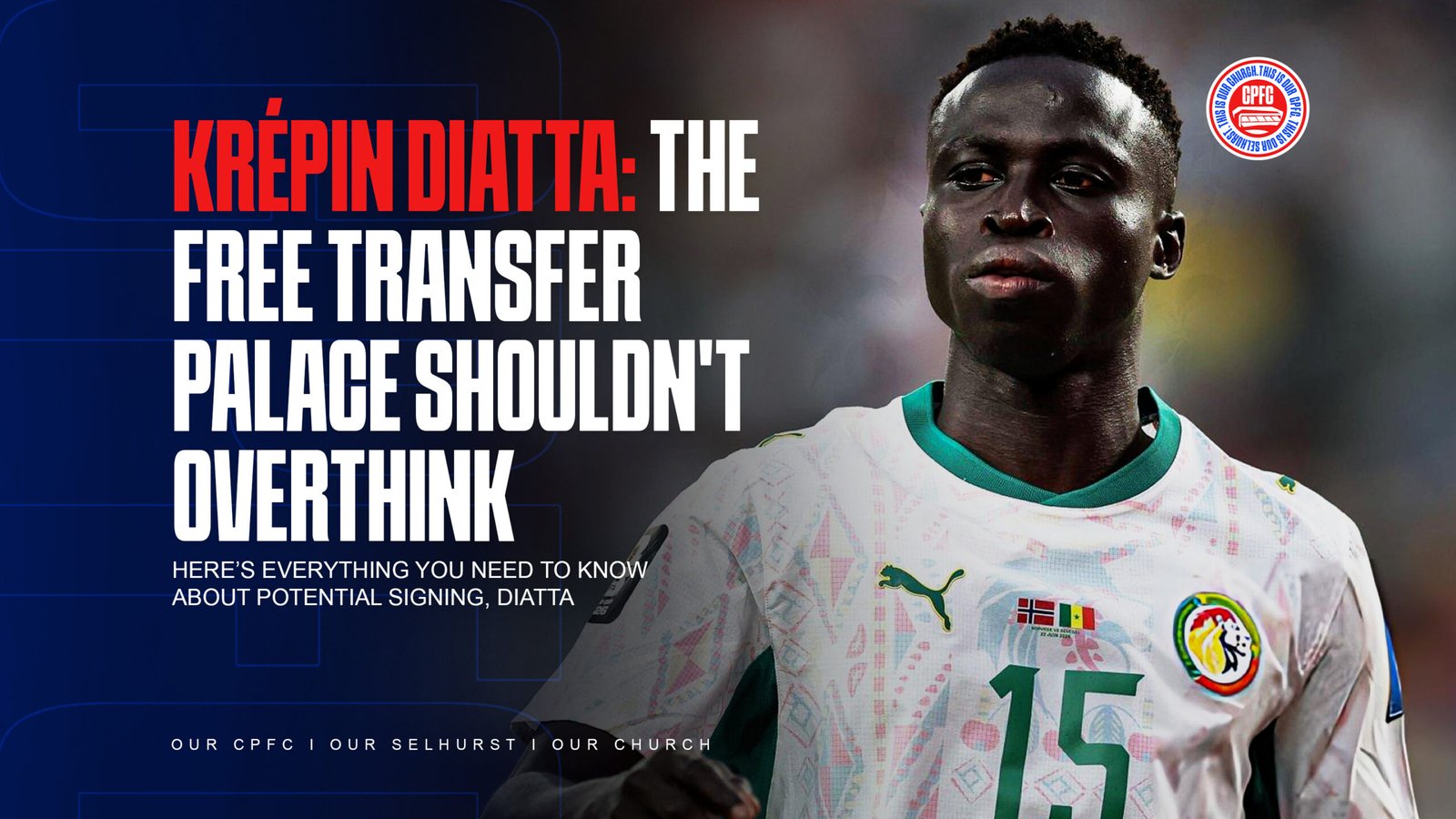
Krépin Diatta: The Free Transfer Palace Shouldn’t Overthink
Reports from Sport Witness and Africa Foot in the last hours suggest that Crystal Palace have moved ahead of Bayer Leverkusen, and are now favourites to sign free agent Krépin Diatta. In this article, I’ll look at his background and playstyle to determine whether he would be a good piece for Pierre Sage’s side.
Free transfers rarely get the pulse racing, but in the midst of a fairly lackluster transfer window at Selhurst Park, this one might be worth getting excited about. Diatta has been out of contract since leaving Monaco at the end of the 25/26 season, and after Leverkusen led the race for most of the summer, Palace have reportedly overtaken them in the last few hours and are closing in on a deal.
WHO IS KREPIN DIATTA?
Krépin Diatta is a 27-year-old Senegalese wide player who spent his early career labelled a “wonderkid” without ever quite becoming a star on the global stage.
He started out at Sarpsborg 08 in Norway before Club Brugge picked him up in 2018; a stage that he immediately lit up. 20 goals and 10 assists in 95 appearances, a Belgian Super Cup, and form that was impossible to ignore, all led to a €16m transfer to Monaco in January 2021.
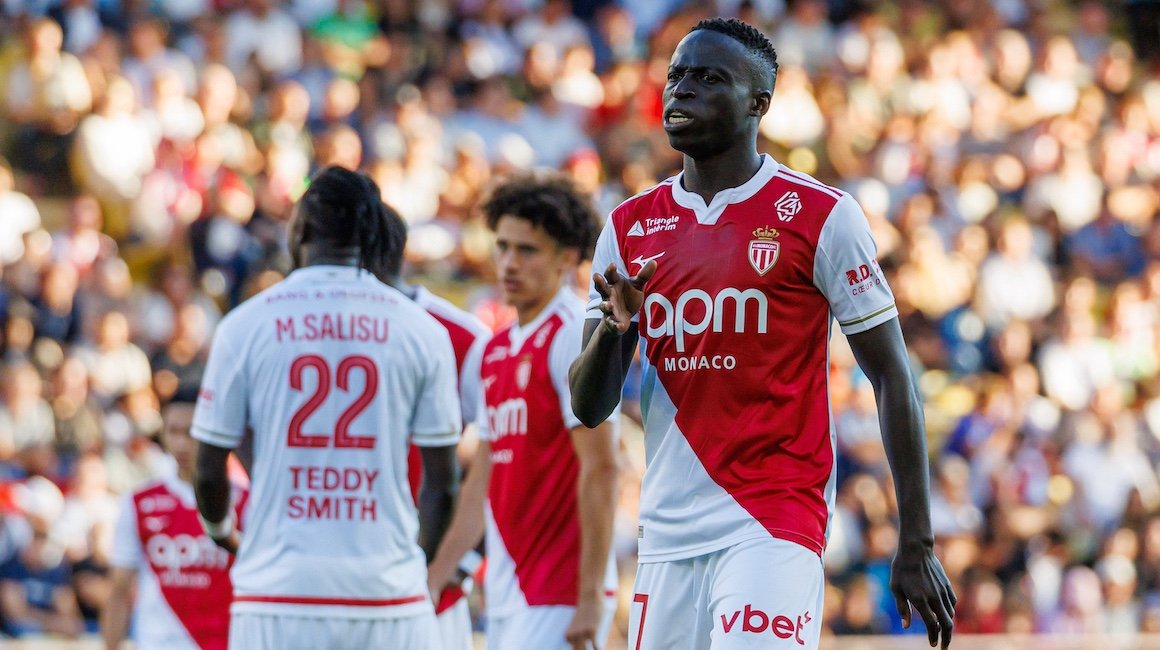
His Monaco spell has been solid rather than spectacular, for reasons both in and out of his control. In November 2021, less than a year into his time there, Diatta suffered a serious ACL injury that kept him out for around nine months. He never fully rediscovered the explosive attacking numbers that made him a “wonderkid” in Belgium, finishing his six years there with just eight goals from 143 appearances. It’s an important piece of context that’s easy to miss: this isn’t a winger who simply stagnated, it’s one whose early prime was interrupted abruptly.
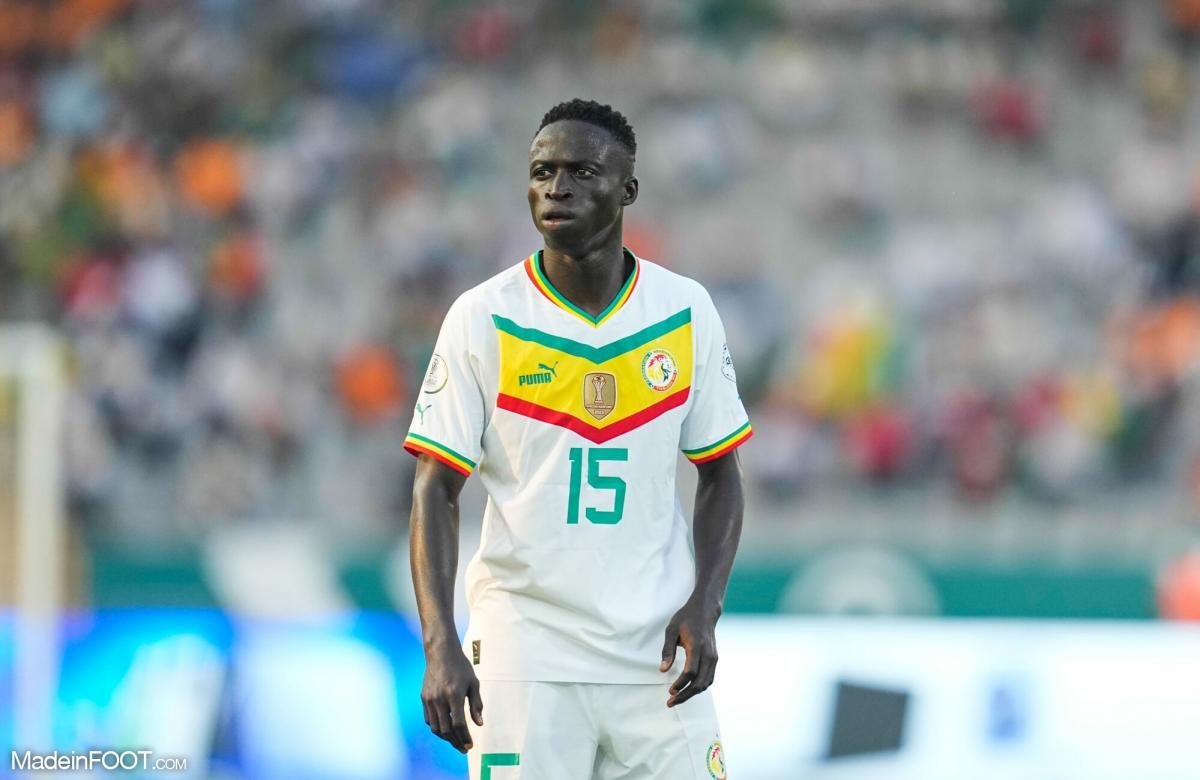
Diatta has made over 60 appearances at international level, starting for Senegal during the group stage of this summer’s World Cup alongside Palace fan favourite Ismaïla Sarr. They’re no strangers to each other on the pitch either, starting alongside one another 47 times for their country already.
THE WINGER WHO WOULD BE WING-BACK
This part of Diatta’s story is what stood out to me when working out how he would fit at Palace, and it’s very easy to miss if you only look at his last couple of seasons.
Diatta wasn’t developed as a defender. He broke through at Club Brugge as an out-and-out attacking talent, with scouting reports from the time labelling him a ‘natural wide forward’, and it was his attacking output that convinced Monaco to spend big on him almost six years ago. Early in his Brugge career, he was occasionally used as a left wing-back in Ivan Leko’s 3-5-2 system, but more out of squad need and desperation, rather than a reflection of his skillset as a player.
His transition into a defensive role came gradually at Monaco and more decisively through international football. During the 2025 AFCON, Senegal’s coaching staff shifted him permanently to right-back, which Diatta accepted with a level of grace that’s worth highlighting, telling reporters that “even if they put me at goalkeeper I will play.” He didn’t just fill a void either. In fact, his defensive numbers at the tournament ranked among the best of any right-back, while his attacking instincts still made him look like, as Pan Africa Football put it, ‘a winger masquerading as a defender’ whenever Senegal broke forward.
This role change wasn’t limited to international football either. During the 25/26 season, Diatta enjoyed one of his strongest runs of form in a Monaco shirt playing as a right wing-back in a 3-4-3. During this time, his performances saw him rewarded with Monaco’s Player of the Month award for October. He’s also found himself starting at left-back in the Champions League against Benfica, and setting up a goal against Manchester City with a cutback from an attacking position on the left side of the field.
WHAT HE OFFERS GOING FORWRDS
Given Palace have just brought in Óscar Mingueza, whose profile already overlaps heavily with the idea of Diatta as a straightforward backup right wing-back, selling this signing purely as “cover for Muñoz” undersells what Diatta could add.
Diatta is at his best receiving the ball while already moving, as opposed to trying to beat his man from a standing start. He thrives making energetic runs into the space beyond an opposition full-back, offering a genuine outlet in transition, while being comfortable making underlapping runs into the channels rather than staying glued to the touchline. When he does reach the final third, he tends to look for a cutback or straightforward delivery rather than a moment of individual brilliance. While it isn’t quite the flair factor that Selhurst has become accustomed to recently, this style fits a team that wants quick, direct combinations as opposed to a winger holding the ball up and inviting a foul.
This profile allows him to be more than just a wing-back option. He could realistically be used higher up, in behind a striker, sprinting into the channel outside an opposition centre-back rather than sitting between the lines waiting to receive to feet. It wouldn’t make him a like-for-like alternative to a genuine ‘ten’, but it would give Sage a way to rest or rotate without fundamentally changing the shape or losing the pressing identity further up the pitch.
His defensive attitude backs all of this up. Monaco highlighted a long recovery run to stop Richarlison against Tottenham as one of the defining moments of his October 2025 form, and he also helped initiate the press that led directly to a goal against Angers. Diatta’s a player who contributes to attacks even when he isn’t the one providing the final ball.
DOES HE SUIT SAGE’S SYSTEM?
Sage’s system at Lens was a 3-4-2-1 that regularly became a 3-2-5 in the attacking phase, where wing-backs pushed forward into conventional winger positions, with the two attacking midfielders occupying narrow areas behind the striker. His stated principles are building properly from defence, constantly attacking the space behind opponents, and pressing aggressively to win the ball back; a framework close enough to what Glasner had established during his tenure at Palace.
Diatta fits several parts of that picture at once, rather than one fixed slot. Right wing-back remains his most proven route in, but given the Mingueza overlap, the more interesting value is probably his ability to also cover the right-sided attacking role, provide left-sided cover given his Benfica and Man City appearances there, and drop into an orthodox right-back if Sage shifts to a back four mid-match. With Diatta, all of this becomes possible for Palace without needing a separate substitution to change shape.
IS HE A GOOD SIGNING?
Diatta wouldn’t arrive as an obvious upgrade on Palace’s strongest starting XI, and he’s unlikely to displace a fit Muñoz any time soon. But I doubt that has ever been the vision.
Where he does add value is as an adaptable option who can be used across the right side, cover the left in emergencies, and offer something further forward without requiring Sage to change his structure. Palace have previously suffered when their first-choice wing-backs are missing, with the whole system losing its bite as a result. A versatile, tournament-tested option who costs nothing in transfer fee seems like a very sensible move, even when accounting for his injury history and the recent arrival of Mingueza.
The best version of this signing isn’t Diatta as a first-choice winger or a marquee attacking addition. It’s as Sage’s utility option: someone who can start at right wing-back, step forward into a more advanced role for a match that calls for it, cover the left flank if needed, and help change formation and shape mid-game.
It may not be the most glamorous of free transfers, but across a long season juggling league and European football, it could end up being one of the most useful bits of business Palace do all summer.
Where would you use Diatta most often: right wing-back, further forward, or as an impact option off the bench? Join the discussion in the OurCPFC Fanzone.